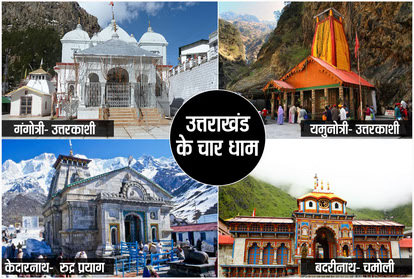
Char Dham Route: A Complete Guide for Your Sacred Himalayan Journey
One of India’s most visually stunning and spiritually potent pilgrimage routes is the Char Dham Route. This historic Himalayan route inspires millions of pilgrims each year as it passes through four sacred sites: Yamunotri, Gangotri, Kedarnath, and Badrinath. Furthermore, the Char Dham Route represents a slow spiritual ascent from purification to enlightenment in addition to being a holy geographical route. Travellers have a profound sense of devotion as soon as they set out on this journey because the Himalayas are filled with stories, prayers, and spiritual energy. Eventually, this route becomes more than a pilgrimage; it transforms into a life-changing journey that reconnects every devotee with nature, faith, and inner peace.
Understanding the Char Dham Route
The Char Dham Route starts at Yamunotri, travels in a clockwise path towards Gangotri, climbs to Kedarnath, and ends at Badrinath. This sequence is deliberately followed because ancient tradition states that the rivers flow in this order. Saints also thought that this direction gradually purified the soul.
Each dham carries immense mythological importance:
- Yamunotri, dedicated to Goddess Yamuna, represents purity.
- Gangotri, dedicated to Goddess Ganga, symbolizes divine strength.
- Kedarnath, dedicated to Lord Shiva, represents spiritual endurance.
- Badrinath, dedicated to Lord Vishnu, symbolizes liberation and peace.
Thus, as pilgrims move forward on the Char Dham Route, they gradually elevate their spirit.
1. Yamunotri – The First Step Toward Purification
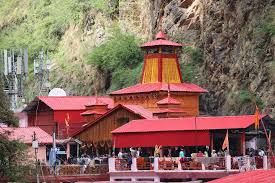
At 3,293 meters, Yamunotri is the starting point of the Char Dham Route. A feeling of devotion is instantly created by the tranquil valley, which is encircled by snow-covered mountains. In addition, the revered Yamunotri Temple has drawn adherents for ages because it honours Goddess Yamuna, who is thought to shield her devotees from early suffering.
Mythological Importance
Yama, the God of Death, is said to have vowed that anyone who bathes in the Yamuna or seeks blessings at Yamunotri will no longer be afraid of dying unexpectedly. In order to provide the soul with its initial layer of protection, pilgrims believe that the journey starts here.
Key Highlights
- Yamunotri Temple shines brightly against the Himalayan backdrop.
- Surya Kund, the hot spring, allows devotees to cook rice and potatoes as prasad.
- Divya Shila is worshiped before entering the temple.
- Janki Chatti, the starting point of the 6 km trek, constantly remains lively with pilgrims.
The Trek
Waterfalls, woodlands, and scenic cliffs can be seen throughout the route, making the walk from Janki Chatti to Yamunotri an unforgettable experience. Additionally, even though the path can be rather difficult, it is safe. Palanquins and horses are also offered to help older devotees. As a result, the initial portion of the Char Dham Route is enjoyable and uplifting.
2. Gangotri – The Home of the Divine River Ganga
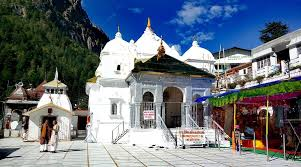
Pilgrims travel to Gangotri, which is located at 3,100 meters, after finishing Yamunotri. The Ganga River originates in this hallowed area, but its true source, the Gomukh Glacier, is located farther upstream. Still, the most significant spiritual hub for Ganga worship is the temple at Gangotri.
Mythology
The legend of Gangotri states that King Bhagirath performed severe penance to bring Ganga from heaven to earth. Consequently, Goddess Ganga descended with immense force. However, Lord Shiva absorbed her strength within his matted locks to protect the world. Eventually, the sacred river flowed gently across the earth, offering spiritual purification.
Key Highlights
- Gangotri Temple, built of white granite, stands beautifully along the Bhagirathi River.
- Bhagirath Shila commemorates the king’s penance.
- Pandava Gufa, associated with Mahabharata legends, enriches the region with history.
- Gomukh Glacier Trek, although optional, attracts adventure lovers.
Experience at Gangotri
When pilgrims arrive in Gangotri, they immediately feel a change in energy due to the profoundly meditative atmosphere created by the sound of the river flowing. In addition, the area offers wonderful tranquilly, thick trees, and clean air. Every pilgrim following the Char Dham Route eventually becomes more determined as a result of this spiritual quiet.
3. Kedarnath – The Heart of the Char Dham Route
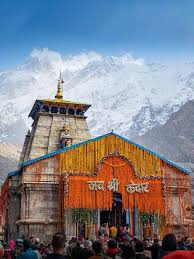
Because it takes the most difficult route on the Char Dham Route, the trip to Kedarnath represents a turning point. This 3,583-meter-high shrine, which is still one of the twelve Jyotirlingas, is dedicated to Lord Shiva. In addition, the temple heroically faces the formidable Kedarnath Mountain Range, which is frequently blanketed in snow.
Mythology
The Pandavas asked Lord Shiva for forgiveness following the Kurukshetra conflict. Shiva, however, evaded them by assuming the shape of a bull. Only his hump was visible when Shiva dove underground as the Pandavas got closer. Consequently, this hump became the sacred structure worshiped at Kedarnath Temple.
How Pilgrims Reach Kedarnath
There are primarily two methods:
1. Trek from Gaurikund
The 18-kilometer walk is still well-known for its breathtaking scenery. In addition, the trail offers breathtaking views of the mountains, alpine woods, and waterfalls. Even though it is physically taxing, travellers finally experience profound spiritual fulfilment.
2. Helicopter Service
Helicopter flights from Phata, Sirsi, or Guptkashi are frequently chosen by elderly devotees or those with little time. This choice guarantees accessibility for everyone and drastically cuts down on travel time.
Experience at Kedarnath
Travellers experience the place’s exquisite intensity as soon as they enter. The temple’s stone walls, which have withstood storms and centuries, reflect extraordinary spiritual power. Meanwhile, the surrounding peaks enhance the atmosphere, making Kedarnath the spiritual epicenter of the Char Dham Route.
4. Badrinath – The Final Destination
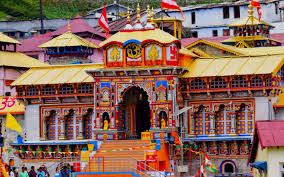
The 3,300-meter-high Badrinath, which honours Lord Vishnu, marks the end of the Char Dham Route. Additionally, a wonderful mood is created by the harmonious combination of the natural surroundings, spiritual calm, and colourful temple architecture. Pilgrims feel a profound sense of accomplishment as they enter the last dham.
Mythology
Legend has it that Goddess Lakshmi shielded Lord Vishnu by providing shade in the shape of a Badri tree while he pondered here for thousands of years. As a result, the place was later dubbed Badrinath.
Key Attractions
- Badrinath Temple stands brightly between Nar and Narayan mountains.
- Tapt Kund offers naturally hot, healing waters.
- Mana Village, the last Indian village, charms visitors with ancient stories.
- Vyas Gufa and Ganesh Gufa enrich the pilgrimage with mythological depth.
Spiritual Experience
Because devotion and nature coexist peacefully, Badrinath exudes a calm, potent aura. The spiritual aura is further enhanced by the Alaknanda River’s movement. As a result, the Char Dham Route concludes with contentment and tranquilly.
Best Time to Travel the Char Dham Route
The temples close in October or November after opening in April or May.
Ideal Time
- May–June: Clear weather
- September–October: Fewer crowds, excellent views
Avoid
- Monsoon (July–August) because heavy rainfall can cause landslides.
Travel Tips for a Smooth Char Dham Journey
- Stay Physically Prepared, because altitude increases gradually.
- Carry Warm Clothes, even in summer.
- Keep Hydrated, since mountain air can cause dehydration.
- Start Early, because Himalayan weather changes quickly.
- Book Accommodation in Advance, especially during peak season.
- Respect Nature, because this pilgrimage passes through delicate mountain ecosystems.
- Travel Slowly, so you avoid altitude sickness.
Final Thoughts
Because it combines spiritual enlightenment, dedication, and the beauty of nature, the Char Dham Route becomes a journey of transformation. Additionally, each dham imparts a fresh lesson: Badrinath enlightens, Kedarnath humbles, Gangotri strengthens, and Yamunotri purifies. Every devotee eventually returns feeling at peace and fulfilled spiritually. In the end, the Char Dham Route is more than just a pilgrimage—it’s an unforgettable, soul-stirring experience.
HIDDEN PLACE . READ NOW